
THE TIMBRE CORRELATION IN TWO LITHUANIAN DIALECTS
The main purpose of this paper was to study the differences of distribution of palatalized and non-palatalized consonants in two uncommon Lithuanian dialects (Eastern Aukštaičiai Uteniškiai and Northern Žemaičiai Kretingiškiai). The analysis revealed that palatalized and non-palatalized consonants should be treated as different phonemes in both dialects. The so-called supersegmental interpretation is rather useful only for Kretingiškiai.
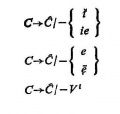
Relying on the facts of both dialects, some presumptions about the diachronic development of timbre correlation can be made. At first such consonants as k, g, š, ž became palatalized before front vowels. The further stages of this development can be shown in a following way:

Šis darbas apsaugotas Creative Commons priskyrimo 4.0 viešąja licencija.