
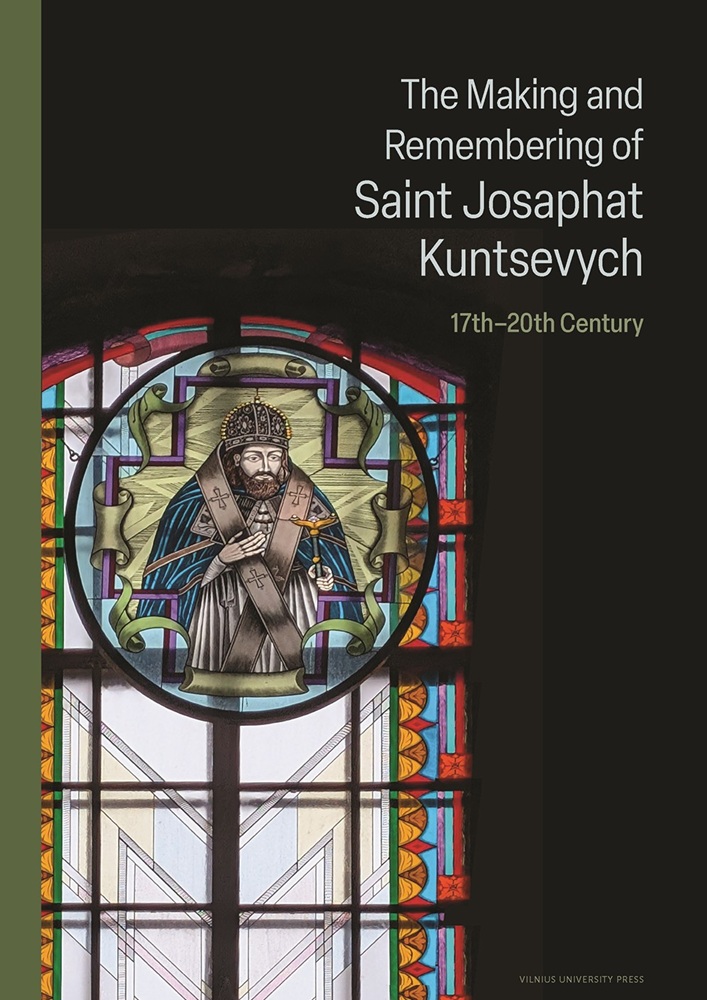
The analysis of Josaphat Kuntsevych as a living and remembered person, or lieu de mémoire, should take place not least within a discussion of the concepts of confessionalization and colonization, as this contribution argues. If, for the Catholic Confession, Piotr Skarga was a typical confessionalizer, seeking to foster confessional homogeneity or aspects of confessional discipline in multiconfessional everyday life, then Josaphat illustrates what a confessionalizer could achieve for the Union of 1596. Indeed, his veneration became established within the Polish-Lithuanian state’s framework, being based on both Ruthenian and Roman Catholic denominational foundations. Thus, this contribution will interpret Russian imperial politics through the example of the use of St. Euphrosyne, a 12th-century Polatsk princess, as a substitute for the veneration of St. Josaphat up until 1914, as seen from a postcolonial perspective on denominational politics. The imagined Russian imperial history concerning Ruthenia was pivotal concerning the policy of Russification, which had already been partially applied after the first uprising in 1831, but especially after the second uprising in 1863.

This work is licensed under a Creative Commons Attribution 4.0 International License.