
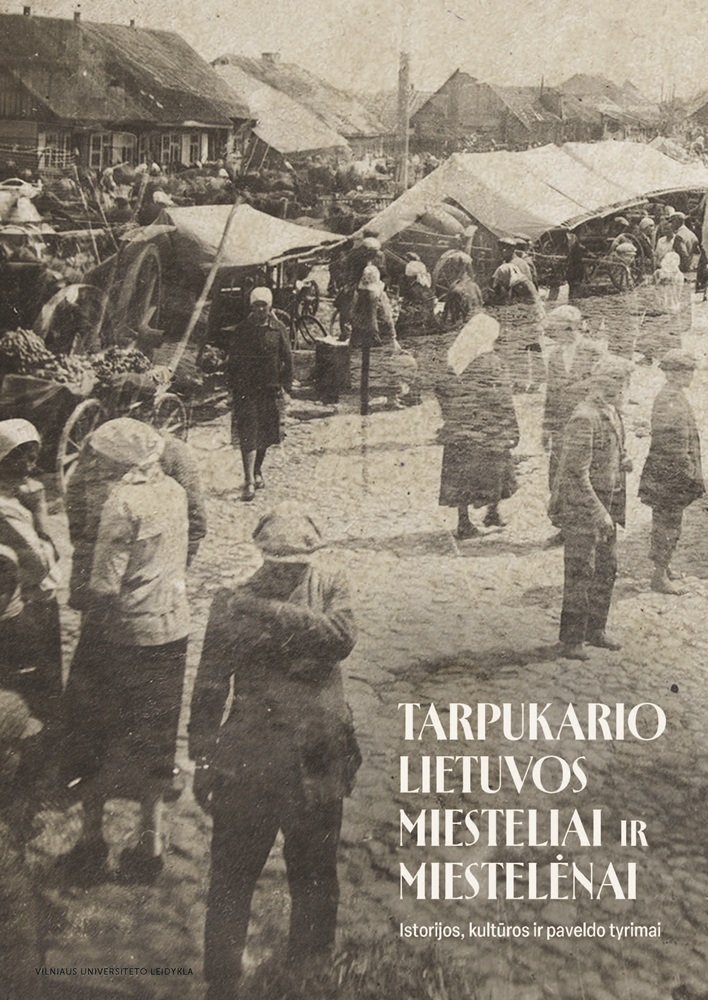
The article explores the place of Jewish communities in the smaller interwar towns in Lithuania in the collective memory of Lithuanians. On the basis of interviews of oral history collected during ethnographic expeditions of Vilnius University students in the 1990s and an oral history project of the United States Holocaust Memorial Museum, the article undertakes to reveal how the Lithuanian generation born in the early decades of the 20th century remembered their coexistence with Jewish people in small towns and whether/how these memories form(ed) the image of shtetl as a small Jewish town in the Lithuanian discourse. The analyzed stories demonstrate that even though Jewish people were in many cases perceived as ‘different’ (due to religious and cultural differences), they were also ‘our people’, part of the everyday life of the small town. Jewish people were mostly residing in small-town centers, they were traders or craftspeople, whereas Lithuanians were mostly involved in agricultural activities, and this formed different social and economic environments. However, in the small(er) towns, Lithuanian and Jewish convivium was inevitable. This was determined by spatially limited environments with shared public zones as well as connections in the trading and services sectors. Relationship among children was usually friendly, whereas contacts between adults were based on hands-on interaction, by working together, neighborhood, or exchange of services. Despite this closeness, certain emotional and cultural distancing were maintained, with special attention to religious differences, involving the practice of Sabbath, food restrictions and synagogues as a Jewish space, as well as festivals and burial rituals. Lithuanians were observing these differences, yet they frequently failed to understand their more profound significance This strengthened the perception of the Jewish community as a peculiar entity, even if the two communities were sharing the same daily life context(s).
Stories feature positive, and frequently nostalgic memories, even if they occasionally involve hinting at economic dependence and ‘neighborly envy’. The unpleasant episodes of the interwar years are usually hushed up and ‘brushed under the carpet’, which can be interpreted as conscious or unconscious avoidance of speaking up, along with selectiveness of post-traumatic memory of the Holocaust.

This work is licensed under a Creative Commons Attribution 4.0 International License.