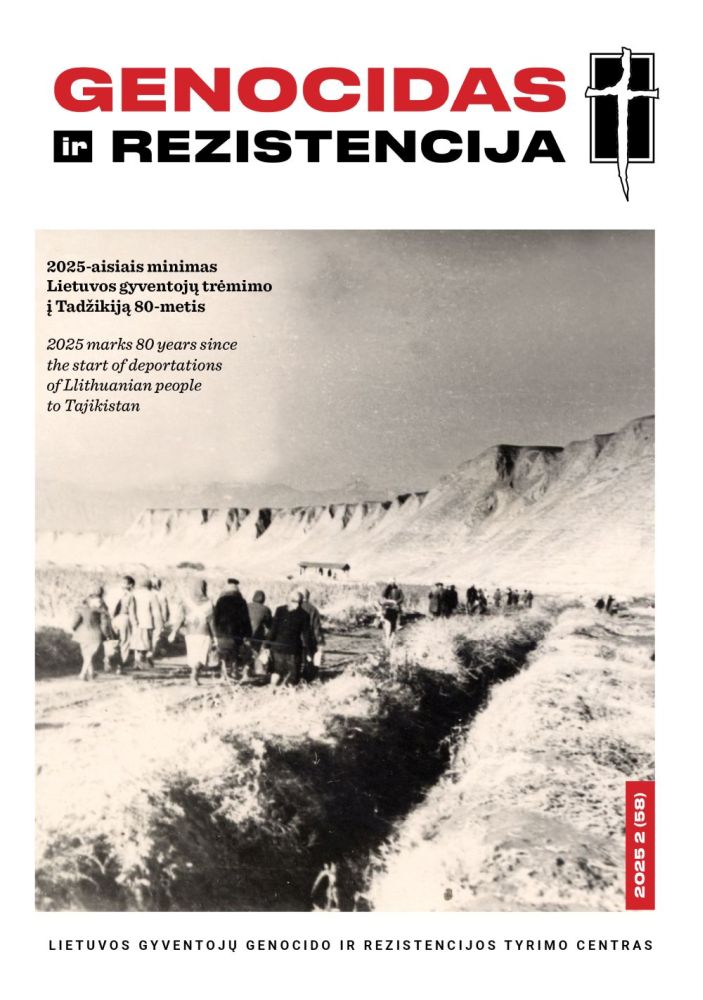
At the beginning of the new Soviet occupation, the repressive apparatus of the Lithuanian NKVD–NKGB, in coordination with their leadership in Moscow, decided at the end of 1944 to deport the remaining German nationals and their families to remote regions of the USSR. Subsequently, directives issued on 29 November and 16 December 1944, mandated the systematic collection of information regarding the Germans who continued to reside in Lithuania.
Although these directives required NKVD–NKGB departments to objectively determine the nationality of such individuals, officials of the Jurbarkas and Šimkaičiai executive committees compiled lists of persons of German nationality by enumerating Lutheran families in villages within their administrative boundaries. Thirty-one families – that is, 130 people, or 16 percent of those deported – were exiled to Tajikistan in 1945 solely because they were Lutherans. Even members of the Lithuanian Lutheran patriotic organisation Pagalba, who had opposed German influence in the Lutheran Church during the interwar period, were condemned to exile. Reports submitted by the executive committees and approved by local and regional NKVD–NKGB officers were unconditionally accepted by the NKVD–NKGB Operational Sector in Vilnius.
Despite the Lutheran Church’s efforts to demonstrate to the Soviet Lithuanian authorities that membersof Lithuanian nationality had been unjustly included in the lists of those to be “evacuated,” their attempts to return the deportees to their homeland went unanswered.

This work is licensed under a Creative Commons Attribution 4.0 International License.