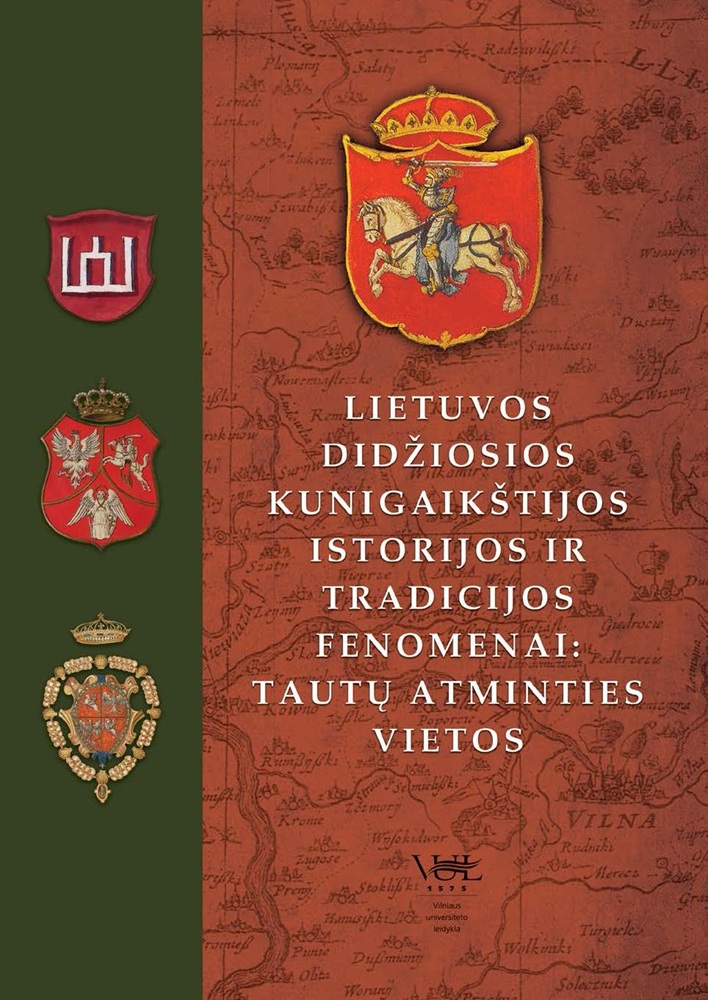
Lietuvos Didžioji Kunigaikštija – tautų atminties vieta: nuo istoriografinio mandagumo prie Septynknygės idėjos

The article is formally dedicated to review the source and theoretical of the several years ongoing Vilnius University’s project “Tradition, image and modern identities of the GDL”.
In the post communist epoch the image of the Grand Duchy of Lithuania was determined by the outlook of the traditions of mono-perspective national historiographies. The Great narratives of these traditions produced a separating (splitting) effect of the GDL’ history, culture and heritage, which was accurately called “splinters of broken mirror”. In order to overcome this “splinter” effect, which was determined by the optics of national historiographies, it was aimed to demonstrate the multiculturalism of the Grand Duchy of Lithuania and its homogeneous cultural forms. The purpose was also to reveal how the ideas evolved in the course of contacts with the colleagues and partners historians from Lithuania and neighbouring countries – Poland, Belarus, the Ukraine, Russia and etc., who understand the subjectivity of the GDL’ history.
This evolution can be described as follows: from historiographical “courtesy” to poli-perspective view of the GDL’s history. This leads to the idea that the application of theory “realm of memories” could create a new form of synthesis – “Heptateuch”. It would not level different approaches but rather make them public in the greatest extend presenting traditional monoperspective as well as new dialogistical attitudes and rejecting those parts of historical chronicles which do not contain intersection of different narratives and thus do not become the realm of memories of the Grand Duchy of Lithuania.

Šis darbas apsaugotas Creative Commons priskyrimo 4.0 viešąja licencija.