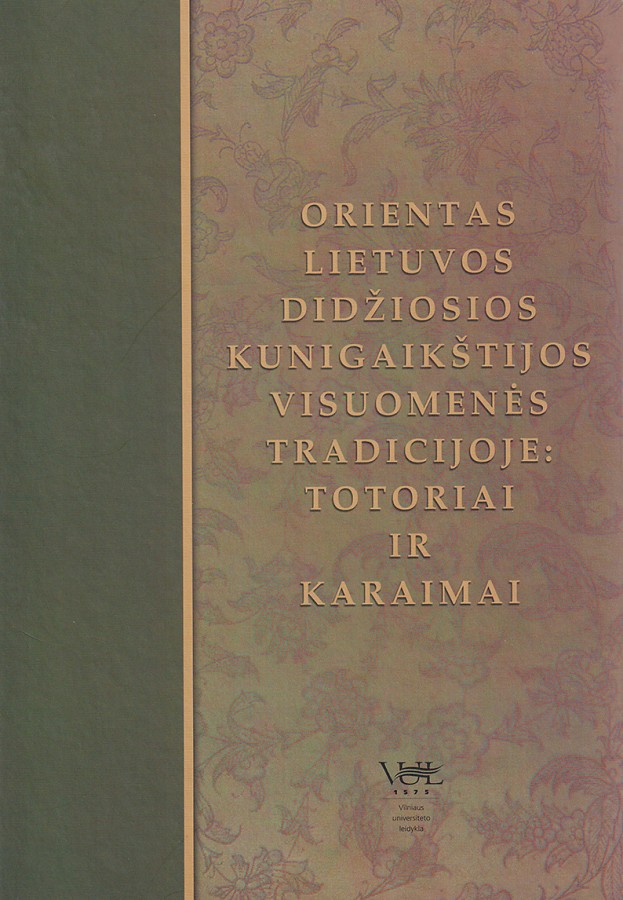
This collection of articles is organized into six thematic sections. The first section brings together studies devoted to traditional historical topics, including relations between the Tatars of the Grand Duchy of Lithuania and the authorities; issues of integration and assimilation within Tatar communities; the situation of local Karaim communities; the demographic history of both groups, examined for the first time in historiography; and an analysis of Karaim cultural activity in Vilnius during the interwar period.The second section focuses on key aspects of Tatar written culture. Its contributors analyze the cultural, thematic, and linguistic layers of religious manuscripts and present newly discovered texts from library holdings and private collections. Karaim religious literature is represented by an article on the catechism of Jacob Duvan. The third section addresses questions related to the Karaim language, as well as anthroponymy and customs, and for the first time clarifies the origin of the name of the village of Forty Tatars. The fourth section is devoted to studies of the image of Tatars and Karaims in society and in written sources. The fifth section presents articles revealing previously unknown biographical facts about prominent Lithuanian Tatars. The sixth section examines the historical memory of Tatars and Karaims, including analyses of archival materials, the publication of sources, and accounts of living memory preserved through contemporaries’ narratives. For the first time, the volume also attempts to explore the formation of Tatar and Karaim community identities in virtual space. The articles are published in their original languages—English, Belarusian, Polish, Lithuanian, and Russian—with summaries provided in English and Lithuanian. This editorial approach reflects the international composition of the contributors and is intended to enhance accessibility and attract a broader readership.
Edited by Tamara Bairašauskaitė, Halina Kobeckaitė, Galina Miškinienė